
How Long Should You Plug In Your Block Heater? (A Manitoba Answer)

Updated: Jun 26

It is minus 30, you are standing in the driveway with the heater cord in one hand, and you are doing the same mental math half of Manitoba does every winter morning. Plug it in now and leave for work, hoping it does some good in two hours? Leave it plugged in all night to be safe? Skip it because the truck "usually starts anyway"? There is a right answer, and once you know it you stop wasting electricity and stop white knuckling cold starts.
Here is the plain version of how long to plug in your block heater, at what temperature it actually matters, and the difference it makes between a truck that fires up clean and one that grinds, struggles, and slowly wears itself out all winter. This applies whether you are running a gas half ton or a Cummins diesel, with a couple of important differences between the two that we will get to.
Key Takeaways
Two to four hours is the sweet spot. That is enough time to warm the engine block and oil. Past about four hours you get almost no extra benefit, you just burn electricity.
Plugging in all night is mostly wasted power. A timer that switches the heater on a few hours before you leave does the same job for a fraction of the cost.
Plug in once it is around minus 15 to minus 20 and below, and definitely below minus 20. Diesels benefit at warmer temperatures than gas engines do.
A block heater warms the engine, not the cabin. It makes for an easier, cleaner start and faster heat, and it cuts the brutal cold start wear that shortens engine life.
A timer is the single best winter accessory you are not using. A cheap outdoor timer pays for itself in saved electricity in one season.
What a Block Heater Actually Does

A block heater is a small electric heating element that sits in your engine, usually threaded into the engine block where it warms the coolant, which in turn warms the metal and the oil around it. Plug it into a standard outlet and it gently brings the whole engine up from deep cold toward something the starter and the oil can actually work with.

The reason it matters comes down to two things that go wrong when an engine is bitterly cold:
Cold oil is thick. Engine oil gets sludgy and slow to flow as it gets colder. On a frigid start, it takes precious seconds for that thick oil to reach all the moving parts, and those first dry seconds are where most cold weather engine wear happens. Warm the block and the oil stays thin enough to circulate fast.
Cold fuel and cold combustion fight you. This is especially true on a diesel, which relies on heat from compression to ignite the fuel. A frozen cold diesel does not want to light, and that is where you get the long grinding cranks, the rough idle, and the cloud of white smoke. A warm block gives combustion a head start.
A block heater fixes both. It is not about the cabin, the seats, or your hands. It is about giving the engine itself a fighting chance at a clean start, which is why people who plug in get faster heat, smoother idle, and an engine that lasts longer. The faster the engine warms, the sooner your defrost actually works too, which is half the battle with keeping your windows from fogging up on a cold Manitoba morning.
How Long Should You Plug It In? Two to Four Hours

Here is the answer everyone is looking for: two to four hours is all you need. Most of the warming happens in the first couple of hours. After roughly three to four hours the engine has absorbed about as much heat as the block heater is going to give it, and it settles into an equilibrium where it is just maintaining temperature, not adding any. Past that point you are heating the cold Manitoba air around your engine more than the engine itself.

That means the all night plug in that so many people default to is mostly wasted electricity. Eight, ten, twelve hours of draw to get a benefit you fully captured in the first four. Over a Manitoba winter that adds up to real money on your power bill, and running the element constantly can shorten its life too.
The smart move is an outdoor timer. A heavy duty one rated for the cold, set to switch the heater on a few hours before you normally leave, gets you a fully warmed engine at the time you actually need it and nothing wasted overnight. Set it for, say, 4 a.m. if you leave at 7. You wake up to a warm block and a power bill that did not take a beating. We sell the cords and accessories for this in our parts department, and it is genuinely one of the highest value things you can add for a prairie winter.
If your mornings are unpredictable, even plugging in manually two to three hours before you leave beats both extremes. The goal is two to four hours of heat landing right before startup, however you get there.
At What Temperature Should You Plug In?

The threshold depends on what you drive.
For a gas engine, plugging in becomes genuinely worthwhile once you are down around minus 15 to minus 20 and colder. Below that, the easier start, faster cabin heat, and reduced cold start wear are well worth the few hours of electricity. In a Manitoba January that is most mornings.
For a diesel, plug in sooner. Diesels are far fussier in the cold because they need that compression heat to ignite, so a block heater earns its keep at warmer temperatures, generally anywhere below about minus 10 to minus 15. If you run a Cummins or any diesel, get in the habit early in the season. A cold started diesel that has not been plugged in is hard on the batteries, hard on the starter, and hard on the engine, and it is the number one cold weather no start call we get.
A simple Manitoba rule of thumb: if it is going to be colder than about minus 20 overnight, plug in, gas or diesel. If you run a diesel, drop that threshold and plug in any time it is solidly below minus 15. When in doubt on a cold night, plug it in. The downside of an unnecessary plug in is a few cents of power. The downside of skipping it on a bitter morning is a no start in a parking lot.
Block Heater, Battery, or Both?

A block heater warms the engine, but it does nothing for your battery, and cold is brutal on batteries too. A battery loses a big chunk of its cranking power in deep cold right when the engine is asking the most of it. That is why a no start in January is often a tired battery and a cold engine ganging up together.
So the full cold weather picture is:
Block heater warms the engine and oil for an easier, cleaner start. Two to four hours.
A healthy battery gives you the cranking power to actually turn that warmed engine over. Worth testing every fall.
A battery blanket or trickle charger is the next level for very cold climates or vehicles that sit, keeping the battery itself warm and topped up.
Proper winter tires are the other half of cold weather readiness. A warm engine that starts clean still slides on hardened all seasons, so it is worth knowing when to switch to winter tires in Manitoba and how the MPI program helps with the cost.
If your vehicle has been slow to crank, dim on the lights, or needed a boost, get the battery and charging system tested before the deep cold arrives. We check battery health as part of a winter readiness service and it is a five minute test that saves a lot of frozen mornings. A block heater on a dead battery still will not start, so the two go together.
A Few Real Prairie Block Heater Tips
Inspect the cord every fall. Block heater cords live in the worst spot on the vehicle, down by the grille catching road salt, slush, and grit. Cracked insulation or a corroded plug is a fire and shock risk. If the cord looks rough, replace it. It is a cheap part.
Make sure it is actually working. A block heater that quietly died last spring does nothing this winter, and you will not know until a bad morning. A quick way to check: after an hour plugged in on a cold day, the engine block near the heater should feel noticeably warmer than the rest. If you are not sure, we can test it.
Tuck the cord away when you drive. Loose cords dragging on the ground get chewed up fast. Most people clip it up behind the grille.
Do not rely on remote start instead. A remote start warms things up by running the engine, but it does that from a cold start, which is exactly the wear you are trying to avoid. A block heater plus remote start is a great combo. Remote start alone on a frozen engine is not the same thing.
When Plugging In Is Not Enough
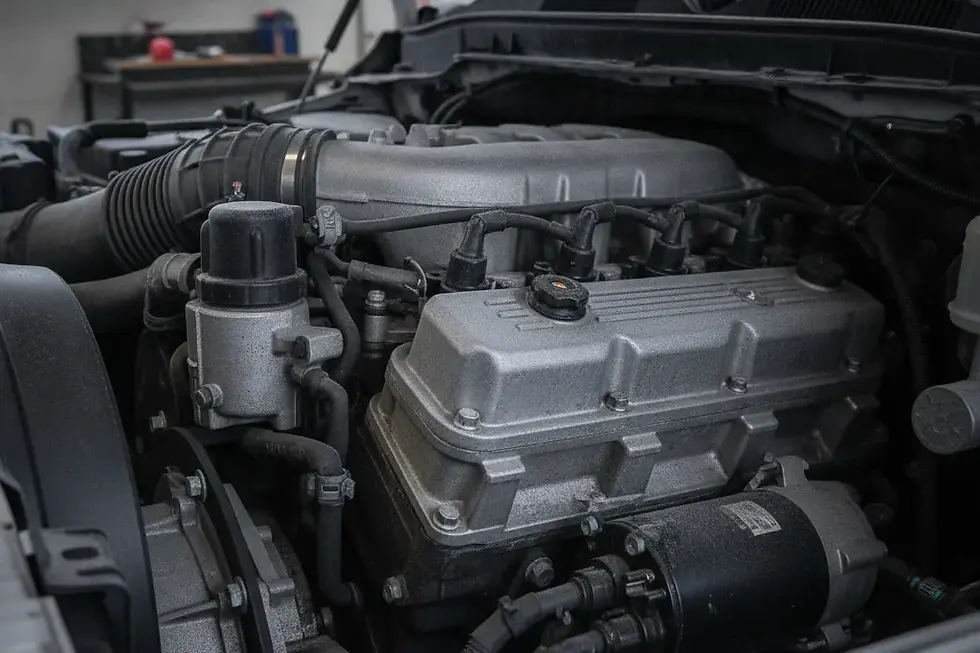
If you are doing everything right, plugging in for the right hours with a good battery, and your vehicle still cranks hard, idles rough, or refuses to start in the cold, the vehicle is telling you something. Tired glow plugs on a diesel, a weak starter, an aging battery, thick old oil overdue for a change, or fuel system issues all show up first in cold weather. Those are worth having our service team look at before they leave you stranded, because the cold only makes them worse.
And there is a point with an older vehicle where you are babying it through every cold snap, plugging in religiously, boosting it, nursing a rough idle, and the math starts to favour something newer. A current truck with a strong battery, a healthy block heater from the factory, and modern cold weather engineering simply starts when you ask it to. If you are tired of the winter morning gamble, our new Ram 1500 inventory is on the lot in Portage, and there is plenty in our used inventory if you would rather keep it affordable. A truck that starts every morning is worth a lot in a Manitoba January.
FAQs
How long should I plug in my block heater?
Two to four hours is the sweet spot. Most of the warming happens in the first couple of hours, and after about four hours the engine has absorbed nearly all the heat it is going to. Plugging in all night gives you almost no extra benefit and wastes electricity. The best setup is an outdoor timer that switches the heater on a few hours before you leave.
Is it bad to leave a block heater plugged in all night?
It is not dangerous with a good cord, but it is wasteful. You get the full benefit in two to four hours, so an all night plug in burns electricity for no added gain and can shorten the heater element's life. Use a timer instead and you get the same warm engine for a fraction of the power.
At what temperature should I plug in my block heater?
For a gas engine, plug in once it is around minus 15 to minus 20 and colder. For a diesel, plug in sooner, generally any time it is below about minus 10 to minus 15, because diesels are much harder to start cold. A simple rule: if the overnight low is colder than minus 20, plug in. If you run a diesel, plug in any time it is well below minus 15.
Does a block heater warm up the inside of my vehicle?
No, not directly. A block heater warms the engine and oil so the engine starts cleanly and reaches operating temperature faster, which means your cabin heater starts blowing warm air sooner. But it does not heat the cabin, the seats, or the windows on its own. For the inside, that is what the heater, defrost, and a remote start are for.
Do I need a block heater if my truck has remote start?
They do different jobs. Remote start warms the vehicle by running the engine, but that is a cold start, which is the exact wear a block heater helps you avoid. The best setup is both: plug in for two to four hours so the engine is warm, then remote start to get the cabin comfortable. Remote start alone on a frozen engine does not protect the engine the way a block heater does.
Why won't my vehicle start even though I plugged it in?
A block heater warms the engine but does nothing for the battery, and cold weather drains battery cranking power hard. A no start despite plugging in is often a weak battery, not a cold engine. It can also be tired glow plugs on a diesel, a failing starter, old thick oil, or a block heater that has quietly stopped working. Have the battery and charging system tested, and we can check the block heater while we are at it.
Plug In Smart, Start Easy
The whole thing comes down to a few simple habits. Plug in for two to four hours, not all night. Use a timer so the heat lands right before you leave. Drop your temperature threshold if you run a diesel. Keep the battery healthy, because the heater cannot do its job alone. Do that and the cold start gamble mostly disappears, your engine lasts longer, and your power bill stays sane.
If your vehicle is still fighting you on cold mornings after all that, book a winter readiness check with our service team and we will test the battery, the block heater, and the charging system so you are not finding out the hard way at minus 30. Stay warm out there.
Tyler Dunn, Dunn Ram Trucks, Portage la Prairie


Comments